A one-hour wind-down that fits your bedtime
Need a bedtime first? The sleep calculator works out bedtimes that end on a full sleep cycle for your alarm.
Your evening, timed back from bedtime
Enter your alarm, and the plan takes the bedtime the sleep calculator suggests for it (5 full cycles plus 15 minutes to fall asleep, for an adult). If your bedtime is already fixed, enter that instead. Each step then counts back from it, from the last coffee to lights out. It prints as a card.
Time your evening
Lull Wind-down plan · instacalc.co
Wind-down plan: bed at 10:45 PM for an alarm at 6:30 AM
- 4:45 PM Last coffee. One cup of brewed coffee (about 95 mg) then leaves no more than 50 mg at bedtime, by our caffeine cut-off calculator's rule.
- 7:45 PM Last big meal, and any hard exercise, finished. NIOSH: no heavy, spicy meals 2 to 3 hours before bed; exercise at least 3 hours before, if falling asleep is hard for you.
- 8:45 PM Lights low. Lamps instead of the ceiling light for the last 1 to 2 hours (NIOSH).
- 9:45 PM Wind-down alarm. From here, only relaxing things: NIOSH suggests an alarm an hour or so before bedtime as the reminder.
- 10:15 PM Devices off. Phone, laptop and TV off 30 minutes before bed (CDC and AASM). Then teeth, face and pajamas.
- 10:45 PM Lights out. Optional: a steady sound with a timer, if that is how you like to fall asleep (see below).

The wind-down hour
A NIOSH training page for nurses gives the idea behind a timed wind-down: “You can set an alarm an hour or so before bedtime to remind yourself to start doing only relaxing activities to get your body ready for sleep.” (source) The same page says that brushing your teeth, washing your face and getting dressed for bed can help you relax and sleep, so those go in the hour too.
Halfway through, devices go off. The CDC lists “Turning off electronic devices at least 30 minutes before bedtime.” (source) among its sleep habits, and the AASM's Sleep Education site gives the same figure: “Turn off electronic devices at least 30 minutes before bedtime.” (source) What fills the rest of the hour is up to you: a book, a bath, a few pages of a journal. The same AASM list says simply: “Establish a relaxing bedtime routine.”
Earlier in the evening: food, exercise, coffee and light
Some steps start well before the last hour. NIOSH lists what to avoid before bedtime, including “Heavy, spicy meals 2 to 3 hours before” (source), and on exercise: “if you have trouble falling asleep, try finishing exercise at least 3 hours before bedtime.” (source) That exercise line comes with a condition: it is for people who find falling asleep hard.
Coffee needs the most notice. The plan's coffee time is our caffeine calculator's rule for one cup of brewed coffee, which gives the latest time that leaves no more than 50 mg at bedtime and never later than 6 hours before bed. A second cup, tea or an energy drink changes it, so the caffeine cut-off calculator works it out for your own drinks.
Light is the last of the early steps. NIOSH says “Keep light levels low 1-2 hours before bedtime.” (source) In practice that means lamps rather than the main ceiling light, and the bathroom light on its lowest setting.
An optional step: a sound with a timer
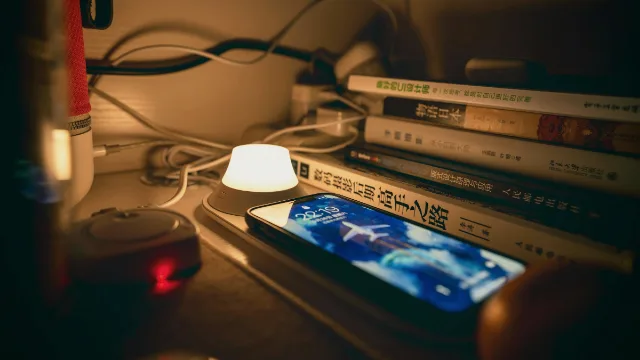
If you like a steady sound to fall asleep to, it can go into the routine with a timer of its own. The Lull app plays brown, pink or white noise, a fan, rain or the ocean, one sound at a time, and its timer stops the sound after half an hour, after one sleep cycle, a minute before your phone's next alarm, or lets it play all night. Its Wind-down screen goes black while the sound plays, and the sound carries on with the phone face down and the screen off, so it fits the devices-off step. We make no claim that a sound helps anyone sleep. The step is there for people who already like one.
If you are still awake
Some nights sleep still doesn't come. For those nights, the AASM's advice is to get up again: “If you don’t fall asleep after 20 minutes, get out of bed.” (source) It also says to do something quiet without a lot of light, and especially not to get on electronics. Back to bed when you feel sleepy, with the same alarm the next morning.
The plan doesn't measure your sleep
The plan puts published habits on a clock; it does not measure how you sleep. The coffee time is our calculator's rule for one cup, the one-hour wind-down follows NIOSH's “an hour or so”, and the bedtime is the sleep calculator's suggestion unless you enter your own. Shift workers need a different plan: the night-shift sleep planner covers that.
See a doctor if you regularly take more than 30 minutes to fall asleep, wake often in the night, or are sleepy in the day even after enough sleep. This guide is general information, not medical advice: read our disclaimer.
Frequently asked questions
How long before bed should I start winding down?
About an hour. NIOSH suggests setting an alarm an hour or so before bedtime as a reminder to switch to relaxing things only. For a 10:45 PM bedtime that is 9:45 PM.
When should I put my phone away before bed?
The CDC and the AASM both say at least 30 minutes before bedtime, which is halfway through the wind-down hour.
How long before bed should I stop eating?
NIOSH's list says no heavy, spicy meals 2 to 3 hours before bed. A small snack is different: NIOSH suggests one if hunger would wake you.
What should a wind-down routine include?
Low light in the evening, devices off, then teeth, face and pajamas, and something relaxing such as reading. The plan on this page puts each step on the clock for your bedtime.
What if I'm still awake after lights out?
The AASM's advice is to get out of bed if you don't fall asleep after 20 minutes and do something quiet in dim light, without electronics, until you feel sleepy.
Sources
- CDC/NIOSH — Training for Nurses, Module 6: Prepare for Sleep2020 · read on
- CDC — About Sleep (recommended hours by age)2024 · read on
- American Academy of Sleep Medicine (Sleep Education) — Healthy Sleep Habits2026 · read on
- CDC/NIOSH — Training for Nurses, Module 6: Sleep Aids and Stimulants, Caffeine2020 · read on
- USDA FoodData Central — Beverages, coffee, brewed, prepared with tap water (SR Legacy 171890)2019 · read on
- US FDA — Spilling the Beans: How Much Caffeine Is Too Much?2024 · read on
- Drake et al., J Clin Sleep Med — Caffeine effects on sleep taken 0, 3, or 6 hours before going to bed (abstract, PubMed)2013 · read on
- CDC/NIOSH — Training for Nurses, Module 6: Do You Have Symptoms of a Sleep Disorder?2020 · read on