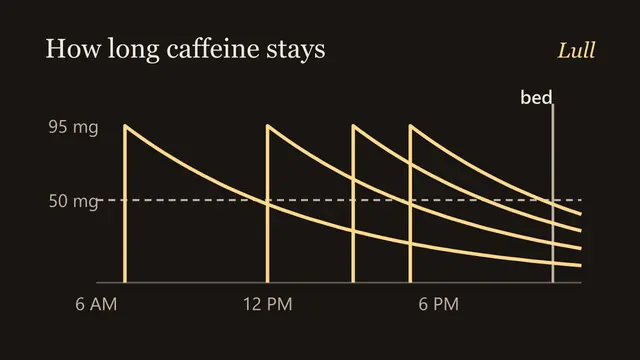
How long caffeine stays in your system
What one coffee at 7 AM, noon, 3 or 5 PM leaves at bedtime.
Page updated
Eight calculators that turn published sleep guidance into clock times for your own schedule. Each example below is worked out by the tool itself from the same data the tools use.
| Your question | The tool that answers it |
|---|---|
| What time should I go to bed for my alarm? | Sleep calculator |
| How many hours of sleep do I, my teen or my child need? | Sleep need by age |
| When should I sleep after a night shift? | Night-shift sleep planner |
| How long should my nap be, and when do I set the alarm? | Nap planner |
| How do I move my sleep for a trip across time zones? | Jet lag planner |
| When should I have my last coffee or tea? | Caffeine cut-off calculator |
| How much sleep have I missed this week? | Sleep debt calculator |
| How far does my weekend sleep drift from my weekdays? | Social jet lag calculator |
Sleep cycles
An alarm at 6:30 AM means bed at 10:45 PM for 5 whole cycles, with every figure behind it sourced.
Find a bedtimeSleep need
At 13 the CDC says 8–10 h, Canada and Australia 9–11 h, and the NHS gives no age band: four countries side by side for any age.
Compare an ageNight shifts
For a 10:00 PM to 6:00 AM shift and a 30 minute trip home: in bed at 6:30 AM, up at 1:45 PM, with each NIOSH step quoted and our own rules labelled.
Plan your dayNaps
A 20 minute nap from 2:00 PM needs an alarm at 2:35 PM, plus the latest start that keeps tonight's bedtime clear.
Plan a napTime zones
UTC-5 to UTC+1 with 2 days of shifting first: 4 nights to your usual bedtime, each in local clock time.
Plan a tripCaffeine
A 95 mg coffee at 4:00 PM still leaves about 36 mg at an 11:00 PM bedtime; get the latest time for each of today's drinks.
Find your cut-offSleep debt
NIOSH's example, 6 hours a night against an 8-hour need for 5 days, comes to 10 hours short. Add up your own last 7 or 14 nights.
Add up the nightsBody clock
Workdays 11:00 PM to 7:00 AM and free days 1:00 AM to 10:00 AM put the middle of your sleep 2 h 30 min apart.
Measure the gapEvery tool reads its numbers from one data file: the calculators use 86 values from 33 sources. 67 are read straight off a source page, 1 is reported by a source from another body, and 18 are our own rules, labelled as such wherever they appear. With the figures our sleep timing guides add, the file holds 129 values from 50 sources. Each result links to the value behind it on the methodology and sources page, and every change is dated in the changelog.
Nothing you type leaves your browser, and there is no account. A share link carries only the inputs of one tool, and only when you copy it. The tools turn published guidance into clock times; they are not a medical test, and a box below each calculator says what it cannot know.
What one coffee at 7 AM, noon, 3 or 5 PM leaves at bedtime.
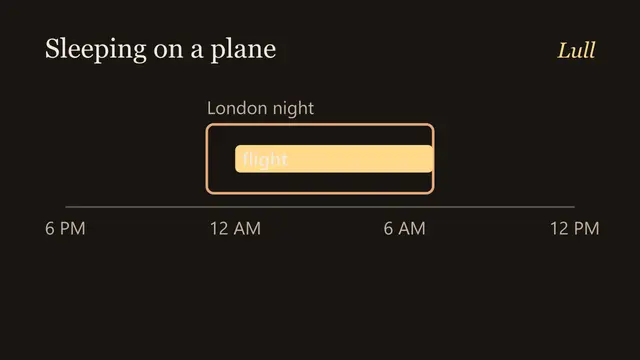
Night where you land? Sleep. Day there? Stay awake.
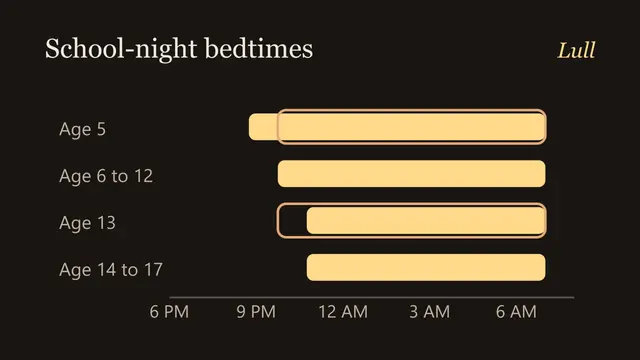
Latest lights-out for every school age, by wake-up time.
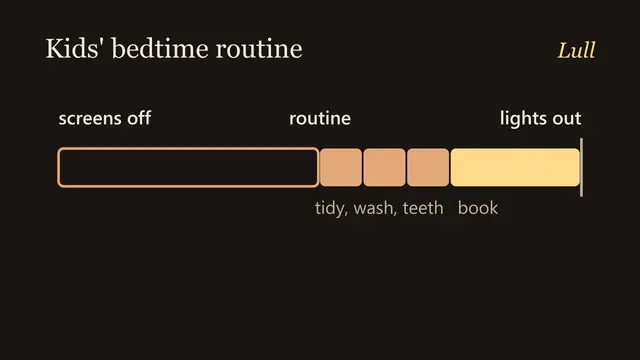
Screens off, tidy-up, teeth, book: timed to lights-out.